

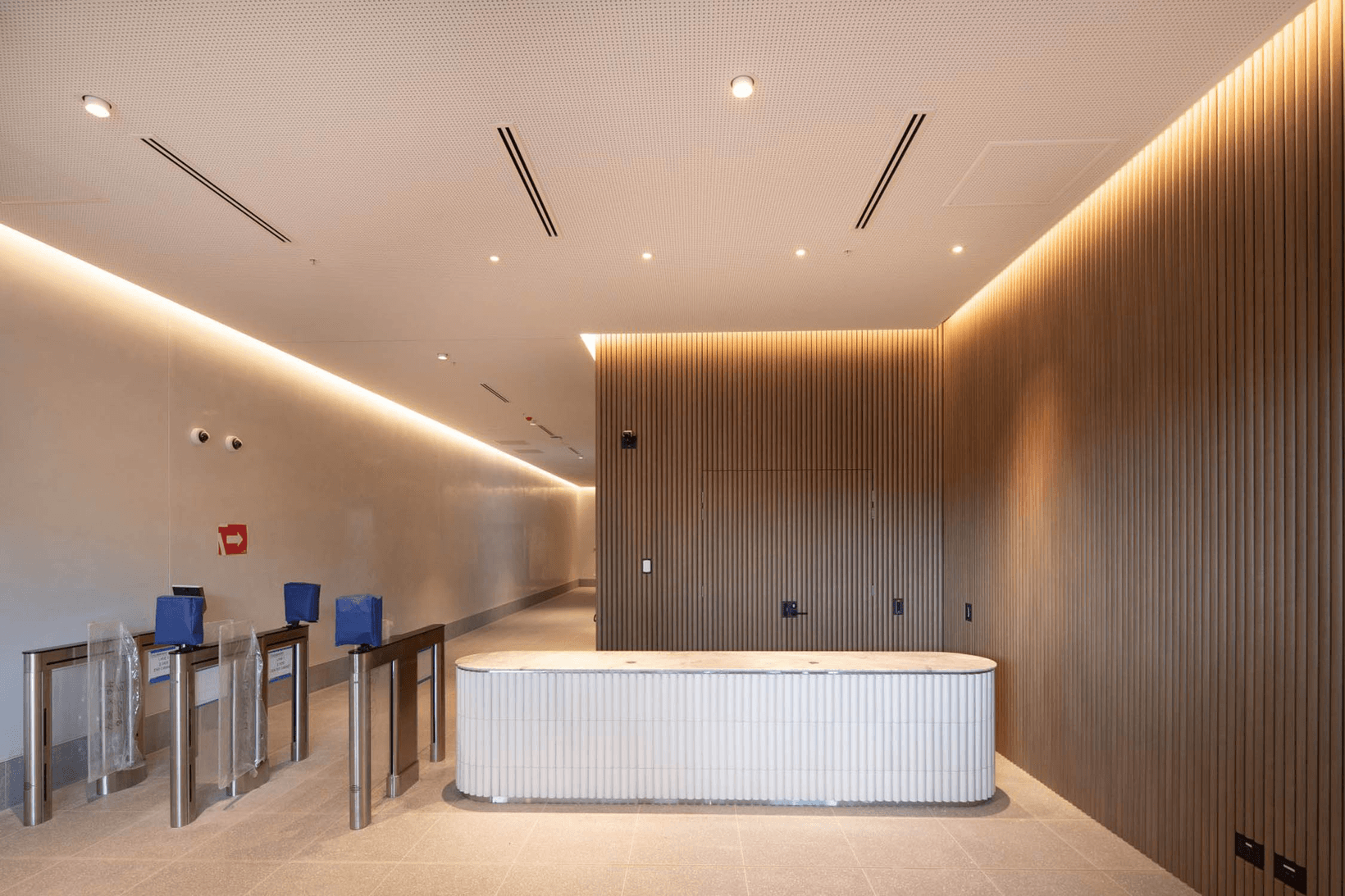
Sydney’s magnificent new state-of-the-art sporting venue, commercially known as the Allianz Stadium, is rebuilt and ready for action. Concluding two years of hard work through staggeringly difficult and unprecedented conditions, the new Sydney Football Stadium (SFS) was successfully delivered by John Holland, in partnership with the New South Wales government, in August 2022.
Built to enhance the spectator experience and compete with sporting arenas internationally, the spectacular new 42,500 seat stadium replaces the original Sydney Football Stadium, located at Moore Park. It features three levels of seating on either side of the playing arena, steep seating angles, which provide unrivalled views of the field and a 360-degree open concourse inside and outside the venue, which includes contemporary bar and dining options, modern bathrooms and stunning corporate and member facilities. Setting the standard for rectangular stadiums in Australia, the innovative and iconic new build was designed by Cox Architecture.
Key to assisting this landmark development deliver on time and under budget was CSR Gyprock’s internal lining solutions, with a range of functional and suitable products specified across multiple applications. “It was the technical resources and knowledge of the CSR Gyprock team that inspired the confidence in Cox Architecture to engage Gyprock for the building of such a significant project,” says Stuart Farrelly, CSR Gyprock, NSW Commercial Sales Manager.
Gyprock partnered with Sydney Plaster to guide product specification and provide technical support onsite. “The team was able to offer practical and innovative design and performance solutions meeting the high-performance standards specified by Cox,” says Farrelly.
Taking into consideration the unique parameters of the football stadium such as mass volumes of people. foot traffic, noise and the numerous types of rooms requiring specific applications including wet rooms, changing rooms, media rooms, kitchens, restaurants, corridors as well as stands, the functionality and performance criteria that each product had to meet was significant, with the additional considerations of seismic and building code regulations.
Rebuilt and Ready for Action Gallery
“It’s extremely satisfying to know that we played our part in assisting the delivery of such a huge project. We are proud to have successfully delivered on all elements, which is testament to the depth of knowledge, ability and craftmanship that our teams and those of Sydney Plaster have when they work on any project, particularly such a large scale, landmark structure as this one.”
Boasting countless innovative moments, the design of the new SFS seeks to maximise the spectator experience, enabling fans access to features that bring them closer to players, blurring the pre-existing boundaries to deliver a more impactful experience. Moderation of the immense sound and energy output of up to 42,500 spectators was key to creating a comfortable experience and products were specified for their aesthetic and performance capabilities.
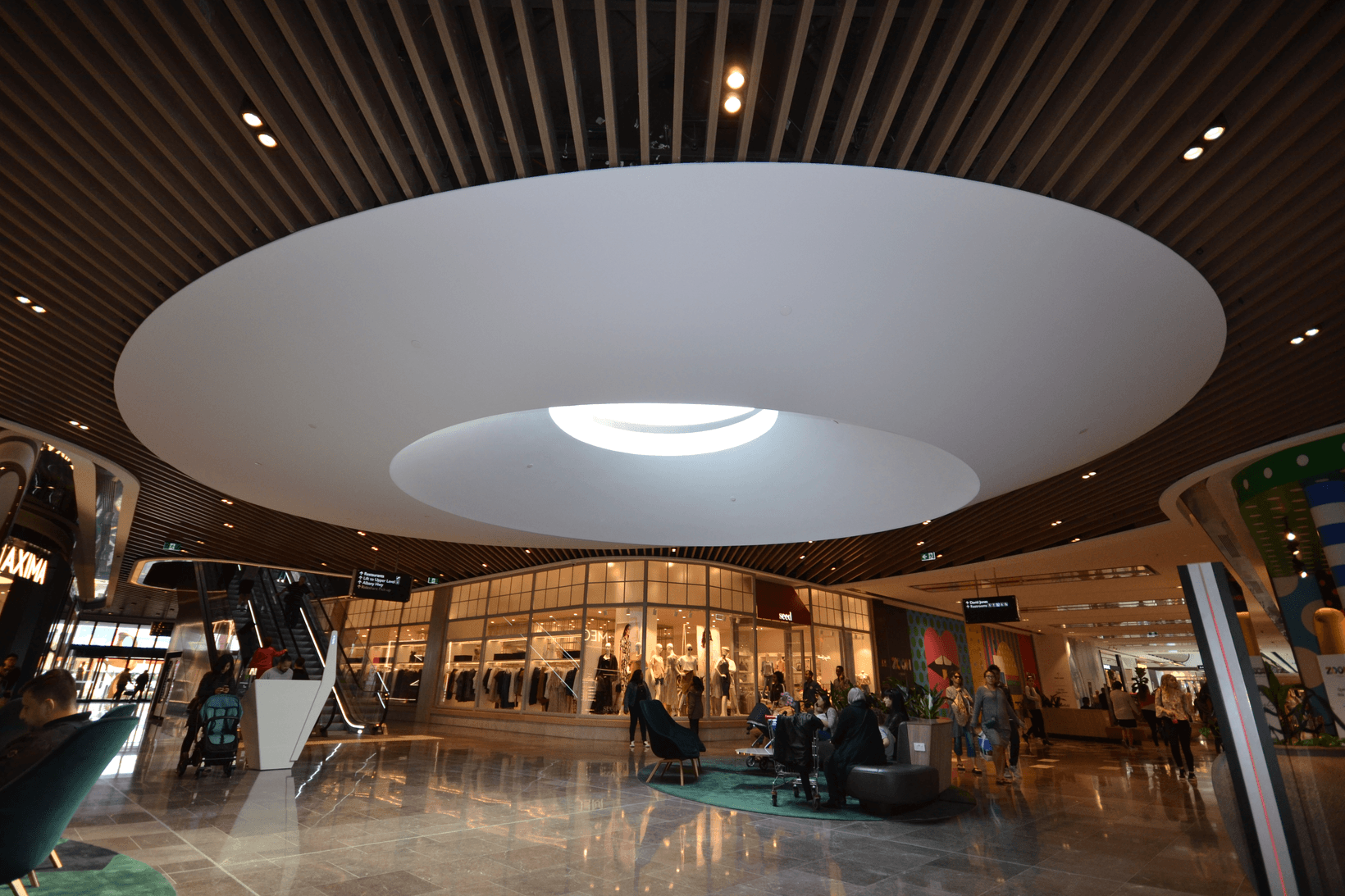
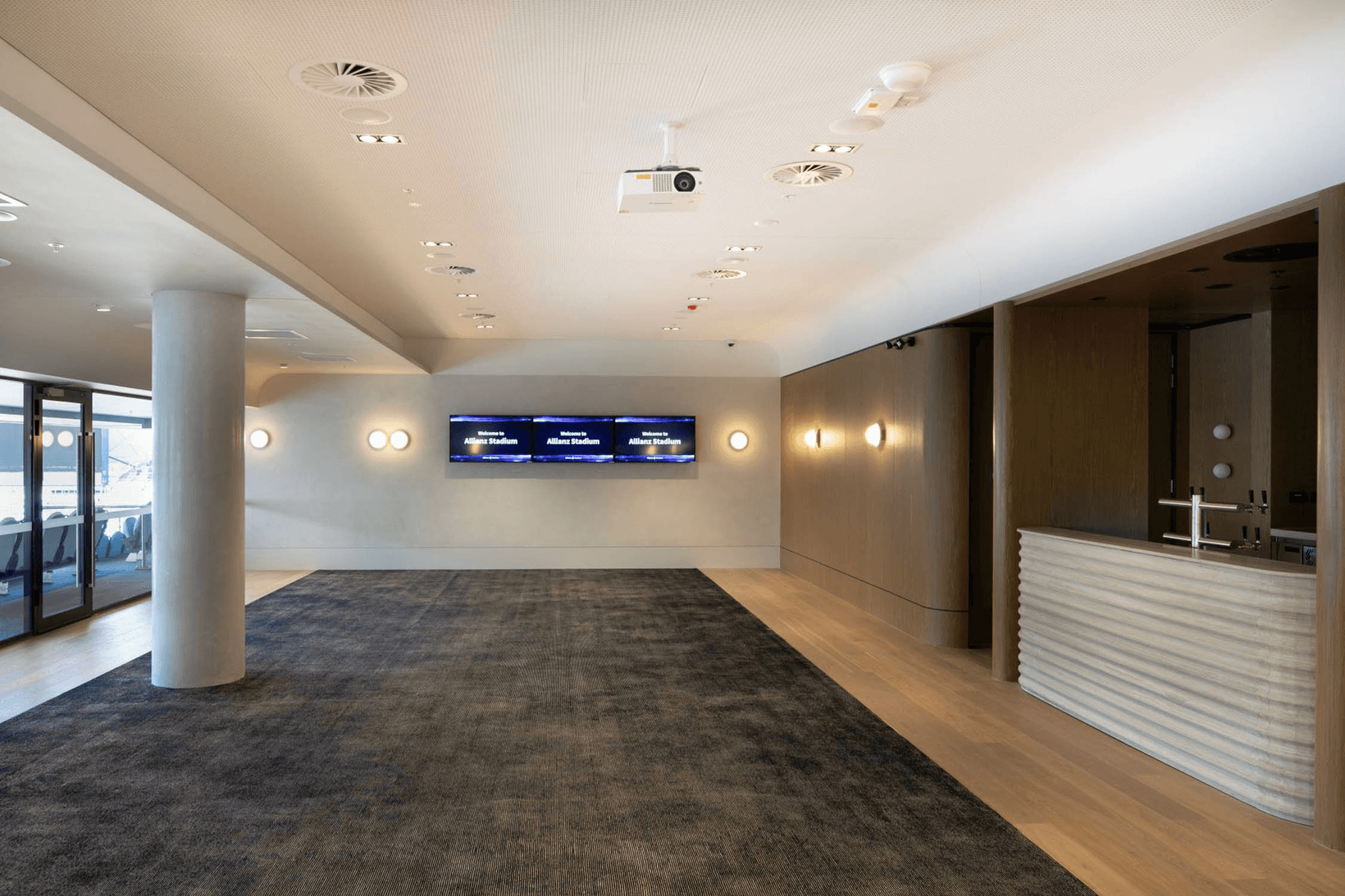
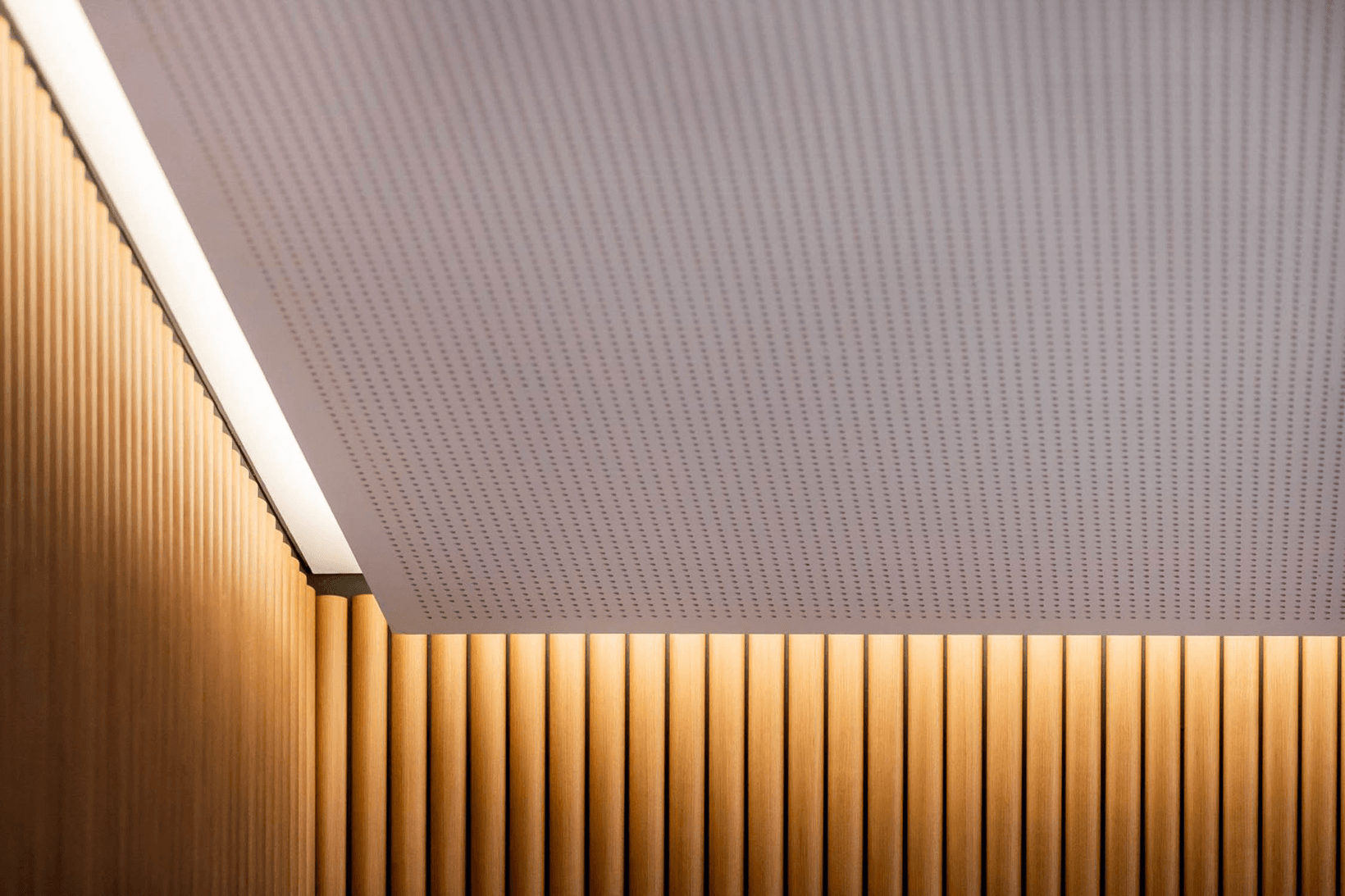
Maintaining the balance between functionality and design was integral to the selection of Gyprock 8mm Rigitone on the ceilings of the corporate areas, VIP entrance and Eastern side main concourse. The Rigitone range features acoustically outstanding perforated plasterboard and succeeds in cushioning sound impact while delivering a dynamic aesthetic.
With the intention of creating visual interest in these key areas of the stadium it was selected primarily for its perforated pattern. “The visual aspect was the key element as well as subduing as much sound as possible.” says Gyprock NSW Commercial Sales Manager Stuart Farrelly.
Also selected for its design and performance capabilities was Gyprock’s premium Flexible plasterboard. Designed to impress, Gyprock Flexible enables specifiers to easily create curved walls and ceilings to add visual interest to a space. The 6.5 mm thick plasterboard sheets have an enhanced gypsum core which is designed to bend, enabling convex curves with a 250mm radius and concave curves with a 450mm radius. The Corporate Platinum room of the new SFS features a dynamically curved ceiling alongside Rigitone Matrix 8 to assist with sound absorption.
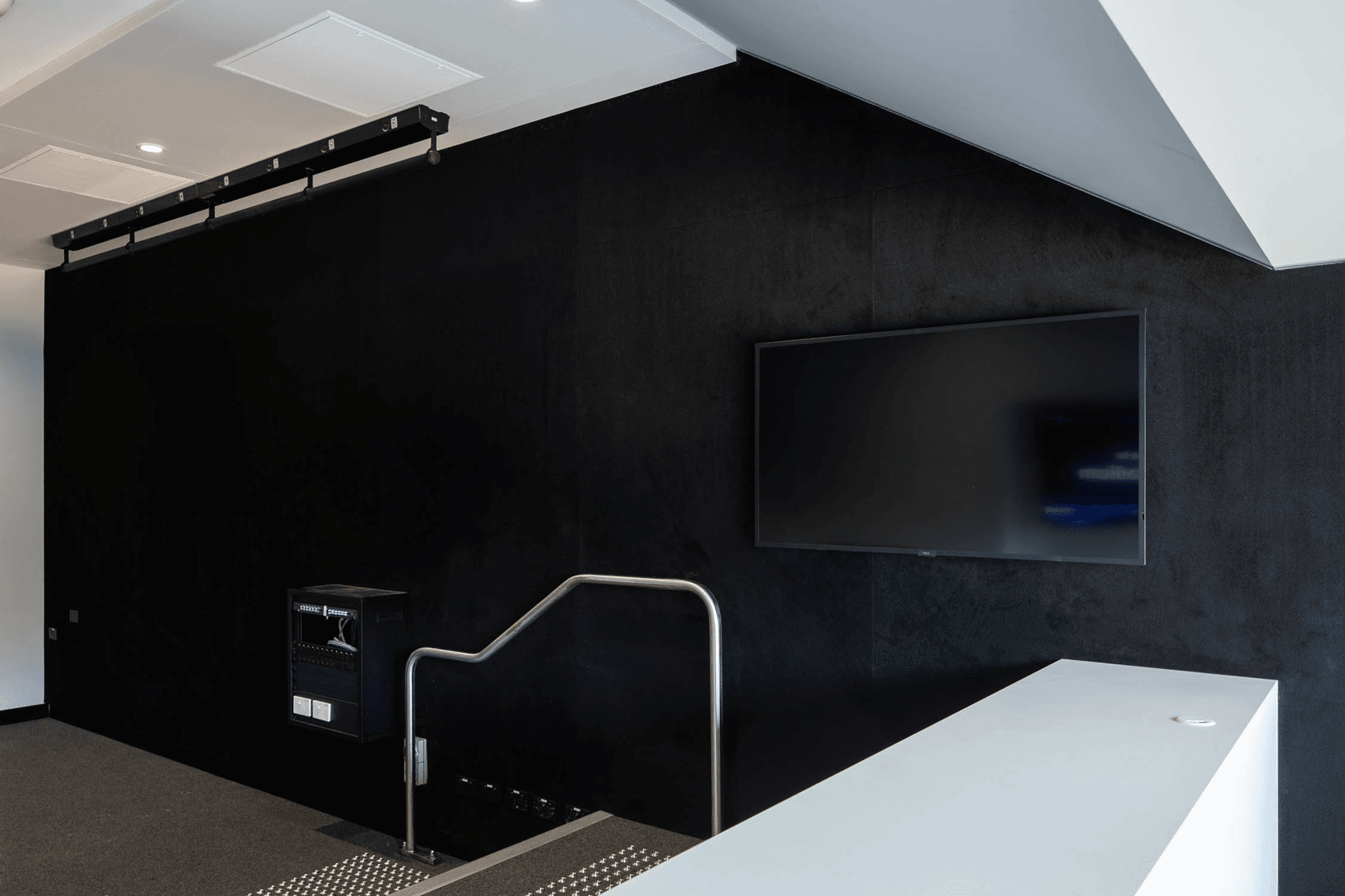
Further products specified from the Gyprock range include; Impactchek, a high-strength 13 mm thick plasterboard with a reinforced core that was used in high impact areas such as hallways and the ‘Rev Up’ Room; Fyrchek, which was selected for the media room where a higher level of fire resistance was required; Aquachek being resistant to water and humidity was selected for the ice bath, showers and all wet areas; and the high performance, sound absorptive Martini dECO Quiet Board by CSR Martini was used in areas that didn’t require the perforated visuals of Gyprock’s Rigitone.
“After a 21-year history with CSR it’s still always so satisfying to see our products play a key role in the success of such large-scale projects such as this,” says Farrelly. “The new Sydney Football Stadium will be one of Australia’s most recognised sporting landmarks.
It has been a privilege to have been involved from the construction phase and to assist with the technical framing while witnessing the project take shape. It’s very satisfying to see the end result.”
Gyprock has been leading the market in the Australian construction industry for the last 75 years, and is continuing to push boundaries, providing complete internal lining solutions for iconic and landmark Australian builds.