

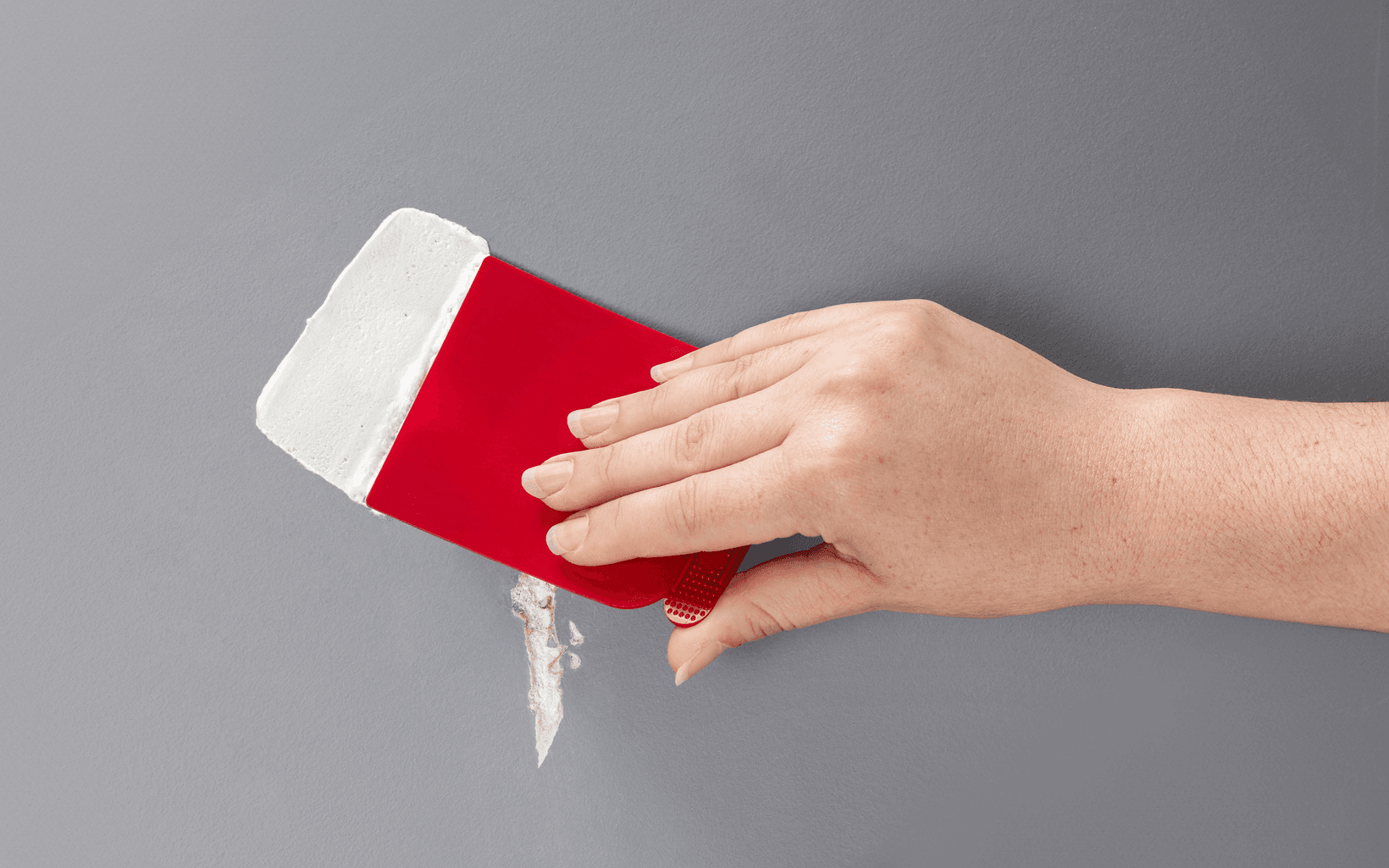
Under normal conditions, your Gyprock walls and ceilings should need no maintenance other than repainting in line with your paint manufacturer’s recommendations. To prevent damage to plasterboard walls, consider placement of furniture to minimise the chance of accidental impact. To prevent impact damage from door handles, doorstops are recommended. If your plasterboard becomes damaged, repairing minor indentations and holes is an easy job.
Simple Surface Repairs
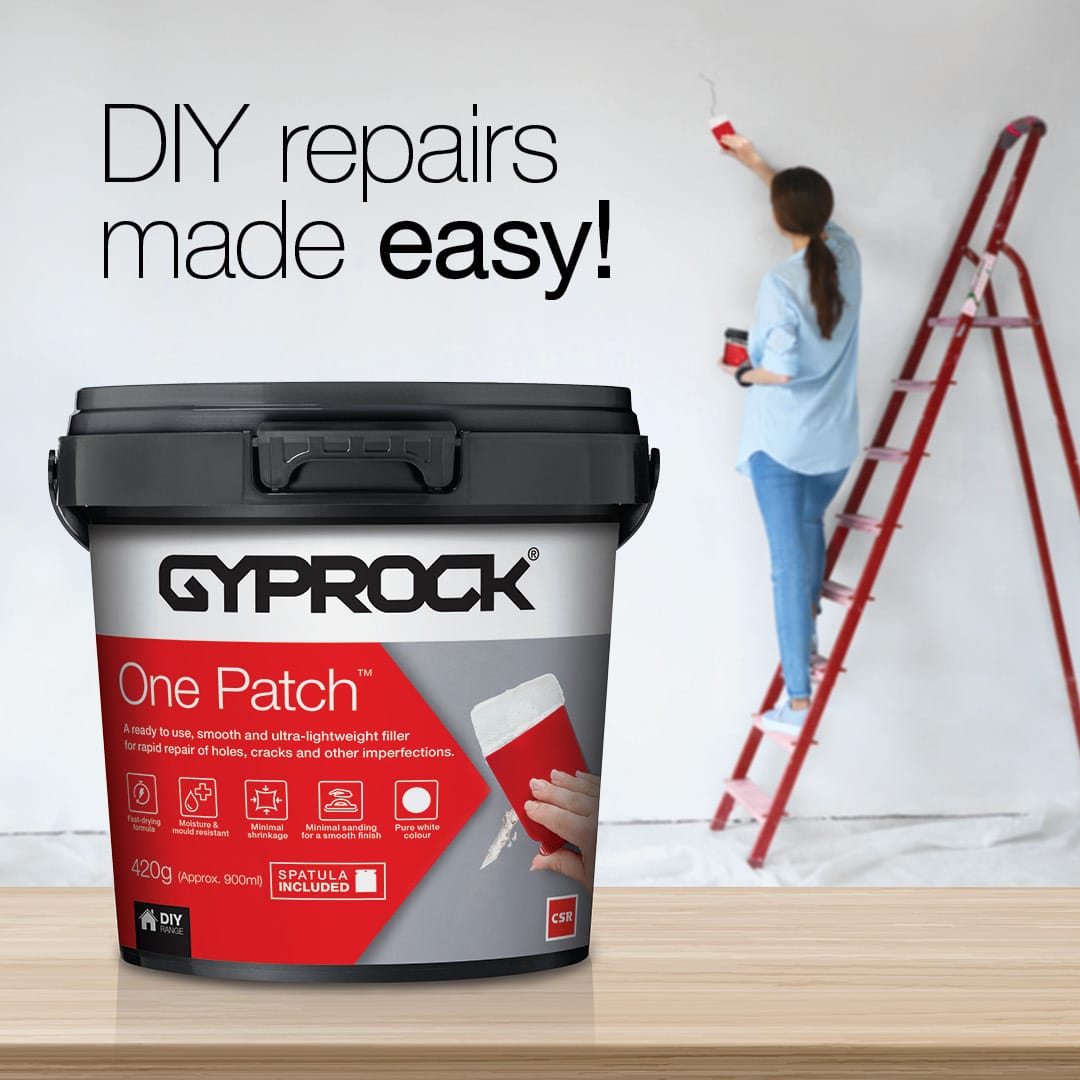
Gyprock One Patch makes DIY repairs of knicks and scrapes effortless in just 3 easy steps - prep, apply and sand!
Fast drying with minimal cracking, this little bucket of Australian Made product is all you need to keep your home looking as fresh and clean as the day you moved in!
Hole Patching
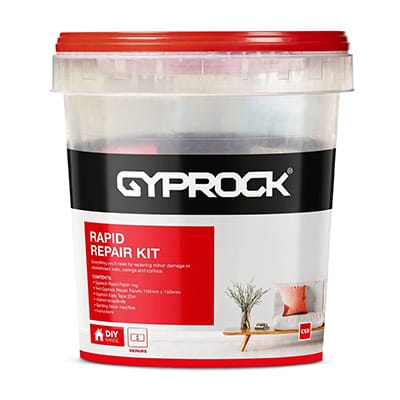
The Gyprock Rapid Repair Kit has everything you need to patch small to medium sized holes in your walls.
Included in the kit is patch compound, two small squares of Gyprock, tape, spade and sanding block. Finish with a quick lick of paint and you wall is back to new.
Larger Repairs
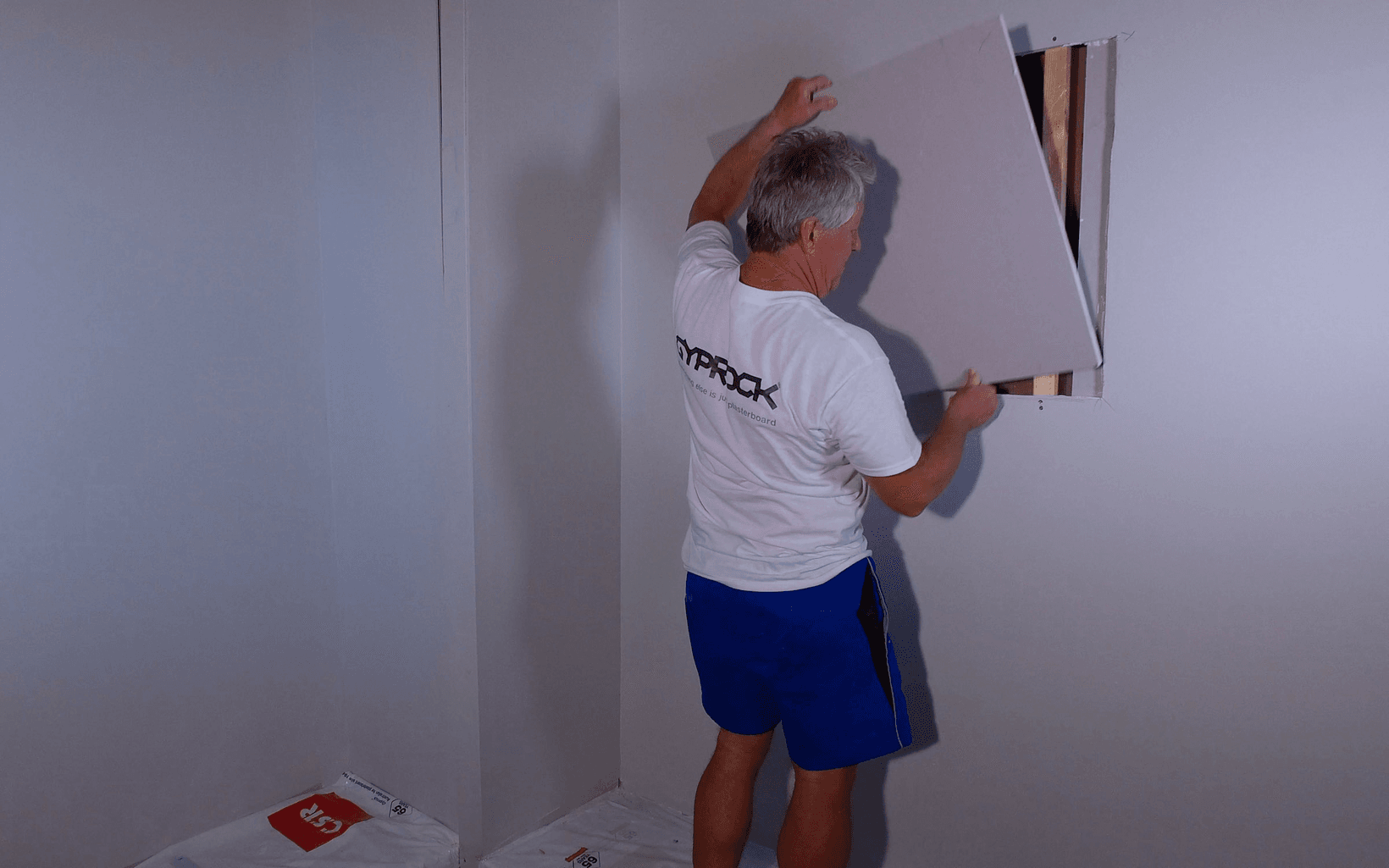
Gyprock Repair Panels can be used to repair holes and damage such as holes, dents and scrapes in residential walls and ceilings. Use Gyprock DIY compounds with your Gyprock Repair Panels.
The Gyprock DIY range of compounds is available for the easy installation and repairs of Gyprock plasterboard and cornice.
It is important that Gyprock plasterboard products be kept dry throughout their service lifetime, and must be protected from internal and external moisture. Regular inspections of the lining system (at least annually), for signs of exposure to impact damage, cracks, moisture or mould as well as regular cleaning and re-painting to manufacturer’s recommendations, will ensure the product continues to perform the function for which it was originally intended.
Cleaning
Light marks can generally be removed with a damp cloth and should be dried thoroughly.
Stubborn marks can be removed with specialty cleaners such as sugar soap, but care should be taken not to scrub, press or heavily wet the plasterboard surface.
Impact Damage
Minor Damage: Where only the paper surface has been scratched or dented, and the plasterboard core remains intact, the area should be lightly sanded and patched with a Gyprock topping compound. Paint as per paint manufacturer’s recommendations.
Major Damage: Where there is a hole, the plasterboard core is weakened (movement at the site of damage when pressed), or the paper is damaged to the extent that the core is exposed, the damaged the section of plasterboard must be replaced. Instructions for repairing major damage are available in the Residential and Commercial Installation Guides, or for DIY projects, in the Repairing Gyprock video and Repairing Holes guide.
For fire rated walls, repair must be completed in accordance with the assessed methods outlined in the Gyprock Professional Solutions Guide ‘Repair Of Gyprock Fire Rated Wall and Ceiling Linings’, available by contacting DesignLINK.
Moisture Damage
In general, it is recommended that Gyprock plasterboard be replaced after being substantially wet, such as due to burst water services or flooding. If the paper becomes wet, or is subject to any deterioration, board strength and the holding capacity of fixings may be reduced.
When subjected to minor water exposure, the plasterboard must be allowed to dry and be inspected for signs of deterioration or warping. If unaffected the plasterboard can be retained, and redecorated as desired.
In tiled areas, any cracks or damage which could allow water ingress into the wall cavity must be repaired immediately by re-stopping and repainting, or by replacing tiles, pointing or sealants.
Moisture damage also occurs from exposure to condensation and humidity, often the result of poor ventilation in areas like bathrooms, laundries and kitchens, commonly resulting in mould and mildew growth.
Mould and Mildew
Mould and mildew can grow on walls and ceilings in areas where there is humidity and insufficient ventilation. An improvement to the ventilation method within the area will dramatically reduce the likelihood of these issues, whether it be natural, mechanical or hybrid. Once ventilation has been improved it is important to remove the mould from existing surfaces and also to ensure spores are not allowed to circulate through the air and find other surfaces to grow on.
Fire and Smoke Damage
Gyprock plasterboard affected by smoke or fire damage is recommended to be replaced, as the heat associated with fire often impacts the performance of the lining material.
Gyprock plasterboard is a durable building material consisting of a gypsum core with a resilient paper facing. It is typically flush jointed and painted to provide a seamless wall or ceiling. All Gyprock boards are manufactured in accordance with AS/NZS 2588 Gypsum Plasterboard and are covered by a Manufactured for Life warranty. Plasterboard is the preferred wall and ceiling lining in around 80% of Australian buildings. Occasionally it will require touching up, repair or replacement where damage occurs on installation or during the life of the building.
.png&w=1640&q=80)